Documents Reveal Britain Bought 13,000 Enslaved Men in the Year It Abolished the Slave Trade
Edited By: Tendai Zola
New archival research has challenged the long-standing narrative that links Britain primarily with the abolition of slavery, revealing instead the direct and sustained involvement of the British Crown and the Royal Navy in the transatlantic slave trade over several centuries.
According to reporting by The Guardian, a forthcoming book by American historian Brooke Newman, The Crown’s Silence, documents how the monarchy was not a passive observer but an active participant in the expansion and protection of African slave trading networks. Drawing on newly examined archives, the study details how the Royal Navy supported slave-trading companies by lending ships, personnel, and supplies from the reign of Elizabeth I through the 18th century, with profits flowing to the Crown.
One of the book’s most striking findings concerns the year 1807—when Britain formally abolished the slave trade within its empire. By that point, the Crown had become the world’s largest single purchaser of enslaved people, acquiring around 13,000 men for military use at a cost of roughly £900,000, according to Newman’s research.
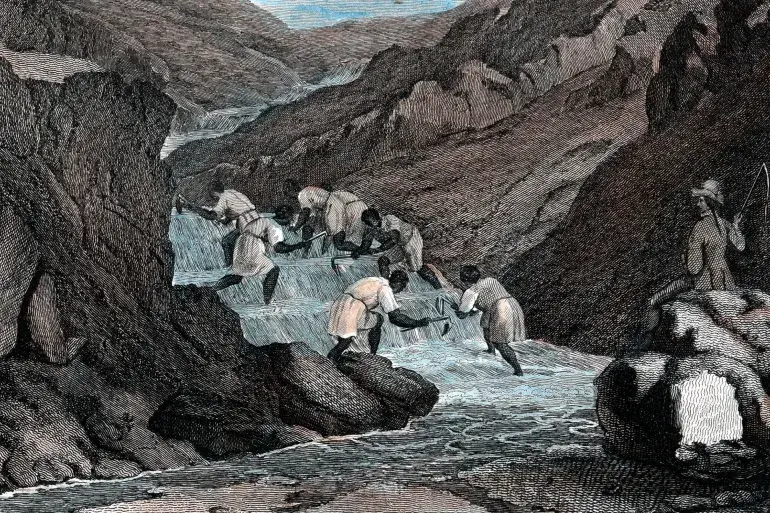
The book also reveals that the Crown continued to own thousands of enslaved people until at least 1831, even as Britain publicly promoted efforts to suppress the slave trade. Enslaved labor was used on confiscated plantations and in strategic facilities such as royal dockyards, where skilled workers were employed after European laborers suffered high mortality from disease.
Beyond abolition, the research indicates that many Africans “freed” by the Royal Navy were later subjected to forced apprenticeships or compulsory military service, particularly in West India regiments. Newman argues that slavery was a cornerstone of Britain’s 18th-century economic growth, fueling the rise of cities such as Liverpool and Bristol and underpinning sectors including insurance and finance.
The book concludes that conditions for enslaved people were no less severe when the Crown was the owner, and that royal silence in the face of abolitionist appeals exposes a darker chapter in Britain’s imperial history.