The Sahel: A War That Swallows Its Civilians
by: Anwar El Mourjani
Since the beginning of 2026, the conflict in the central Sahel has entered a phase that traditional labels struggle to capture. What was once described primarily as a jihadist insurgency against state armies is evolving into something more diffuse and more intimate. The growing operational strength of the armed coalition known as JNIM on one side and the rapid expansion of civilian auxiliaries on the other are producing a grey zone where everyday life itself can determine a person’s fate. Living in the wrong village, travelling on the wrong road, or being associated with the wrong person can be enough to attract suspicion. The central danger is no longer only the presence of armed groups but the gradual disappearance of the boundary between civilian and combatant.
Recent violence in Burkina Faso illustrates this shift. In a matter of weeks, attacks spread across the Est, Centre-Nord and Nord regions. More than thirty assaults targeted military positions, forest ranger units and state-supported volunteer forces, causing the deaths of over one hundred and twenty people. Many of those killed were not professional soldiers but villagers who had joined local defense structures. Behind these figures lie ambushed convoys, isolated posts overrun in rural areas and communities forced to watch neighbors move from ordinary life into armed roles. The objective of these attacks appears to go beyond confronting national armies. It also aims to weaken the hybrid security system that increasingly relies on civilians organized into local defense groups.
This militarization of rural life has been building for years but is now reaching a scale that reshapes daily existence. Burkina Faso’s Volunteers for the Defense of the Homeland, often known as the VDP, began as a limited support initiative but have expanded into a wide network that sometimes fills the vacuum left by weak state presence. For many participants, the decision to join is driven less by ideology than by fear and necessity. A shopkeeper in the Nord region who joined the volunteers explained that refusing to participate could expose a village to attack or raise suspicion from authorities. His younger brother chose a different path and moved to the city to avoid recruitment by any armed actor. Yet even returning home to visit family now involves navigating checkpoints, escorts and the risk of being stopped by fighters who treat every traveller as a possible adversary. In such an environment, neutrality becomes increasingly difficult to maintain.
A similar pattern appears beyond the Sahel. In South Sudan, data collected by conflict monitoring organizations show a rise in confrontations between government forces and local armed groups. Many of these clashes stem from disputes over the implementation of the 2018 peace agreement. There too, violence has not returned in a single dramatic collapse but has spread gradually as local armed actors fill gaps left by fragile institutions. The comparison highlights a broader regional dynamic. When states rely heavily on locally organized defense forces to compensate for limited capacity, new security arrangements emerge that blur the lines between community protection and armed mobilization.
Observers increasingly describe these situations as conflicts of permanence. Instead of pursuing decisive military victories, the actors involved seek to maintain control over territory, resources and local loyalties over time. In the central Sahel this environment includes national security forces, insurgent coalitions such as JNIM, community militias, foreign security contractors and civilian auxiliaries. Each group operates within its own network of taxation, protection and authority. A grain seller travelling to a weekly market may pay a security fee at one checkpoint operated by local volunteers and another informal tax further along the road at a position controlled by armed men from a different faction. Neither payment is voluntary, yet both are framed as necessary for protection, making the distinction between security and exploitation increasingly blurred.
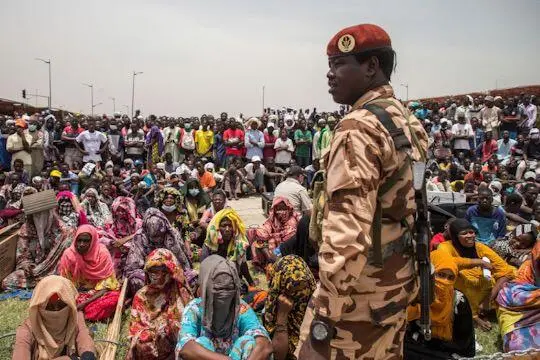
The security response itself has gradually transformed daily routines. In many parts of Burkina Faso, the militarization of society extends beyond those who carry weapons. Informal intelligence networks, improvised roadblocks and community patrols mean that ordinary activities such as visiting relatives or transporting goods require constant judgment about risk. The state is no longer the sole authority governing the use of force and often cannot fully control how local defense structures operate. In some towns the same volunteer patrols that help deter attacks also possess the power to accuse neighbors of collaboration, accusations that can carry severe consequences for entire families.
Armed groups have adjusted their strategy in response. JNIM now functions not only as an armed movement opposing state forces but also as an actor that imposes rules over certain territories. It regulates movement, collects forms of taxation and intervenes in local disputes. Attacks on volunteer units and auxiliary forces are therefore aimed not only at weakening the official security apparatus but also at discouraging alternative forms of local authority. When positions staffed jointly by soldiers and civilian volunteers are targeted, the distinction between professional fighters and newly armed villagers disappears in practice.
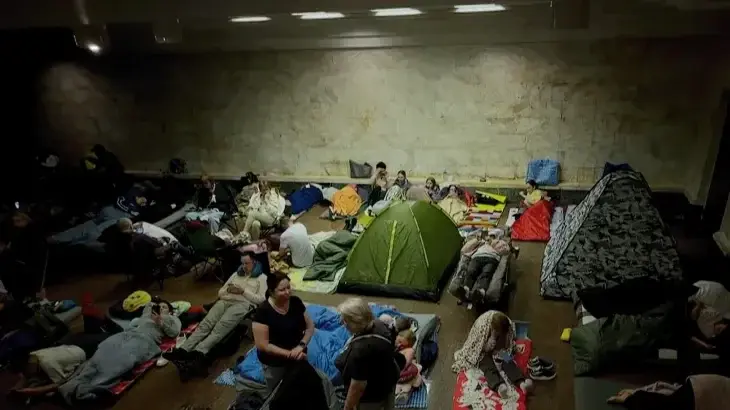
For families across the region, the result is a deep and cumulative strain. In many households different members now occupy different positions within the conflict landscape. One relative may serve in a volunteer defense group while another has fled to an urban area to avoid recruitment and a third may live in a camp for displaced people after an attack on their village. Decisions about staying, leaving or participating in community patrols become choices made under pressure and uncertainty.
Periods of relative calm between major attacks should not be mistaken for a return to stability. In many localities daily life continues through careful adjustments. Markets reopen along alternative routes to avoid certain checkpoints. Schools operate intermittently depending on security conditions. Community gatherings are smaller because large assemblies may attract suspicion. Normal life becomes a series of small adaptations rather than a restoration of trust.
From an analytical perspective, the central Sahel currently occupies a precarious middle ground. State institutions remain present and armed groups have not established uncontested control over large territories. Yet the ability of any actor to convince communities of a stable political future has weakened. In this environment the decisive turning point may not be a major offensive or a political change. It may come when entire communities conclude that carrying weapons is no longer a temporary response to crisis but a permanent condition of everyday life. At that point, the militarization of civilians will have become one of the defining structures of the conflict itself.