Syria Faces a Growing Security Dilemma Over Islamic State Detention Camps
Edited By: Laila Abou Rabie
Syria’s new authorities are facing mounting pressure over the future of detention camps and prisons holding thousands of Islamic State (ISIS) fighters and tens of thousands of their relatives, as the United States gradually reduces its military presence in the country.
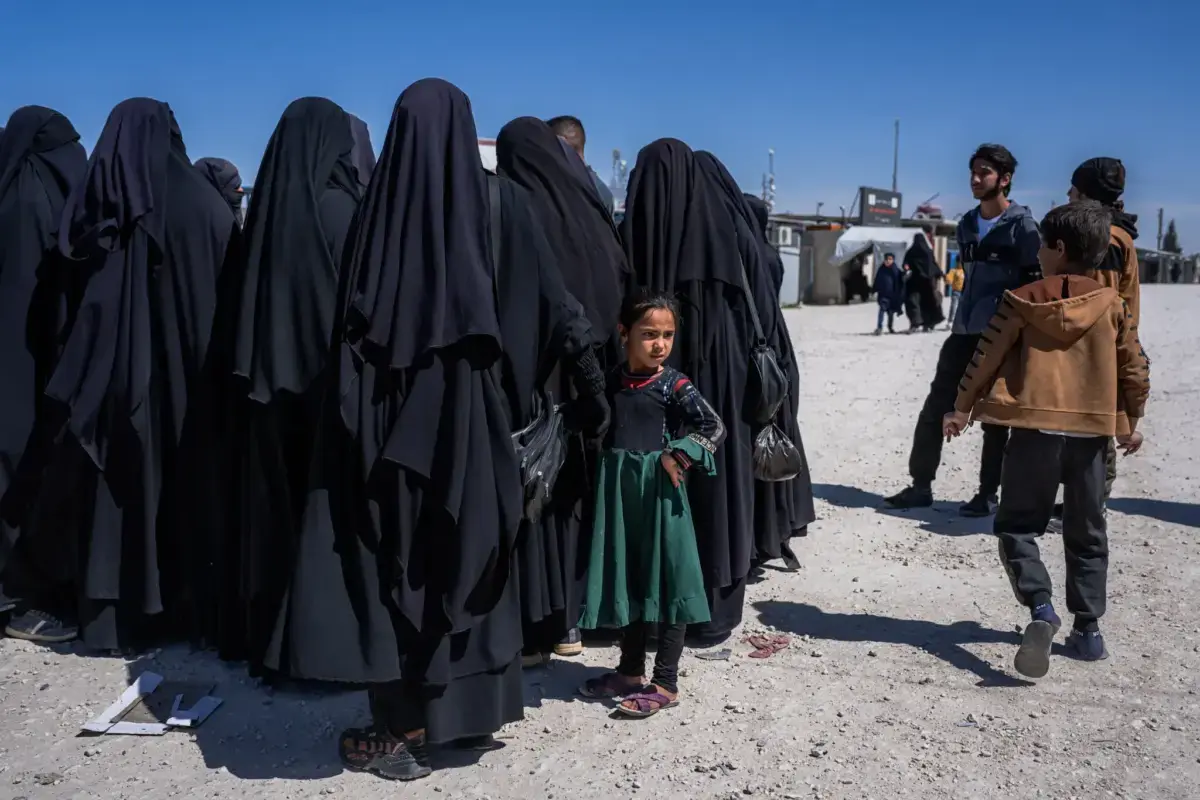
In northeastern Syria, the vast Al Hol camp remains one of the most sensitive legacies of the civil war. Surrounded by barbed wire and guarded by Kurdish-led Syrian Democratic Forces (SDF), the camp houses mainly women and children linked to ISIS fighters. Nearby prisons hold more than 8,000 suspected militants. These facilities were established after U.S.-backed Kurdish forces defeated ISIS territorially in Syria and Iraq, detaining fighters and their families during military operations.
With Washington signaling that it wants Syria’s new government to assume responsibility for these detainees, the issue has become central to broader efforts to reunify the country after 13 years of conflict. The transition is complicated by plans to integrate the SDF into a reconstituted national army, a move that has raised deep concerns among Kurdish leaders.
Many Kurdish officials distrust the new authorities in Damascus, who are led by former Islamist rebels with past links to Al Qaeda. They fear that the government may not be fully committed to preventing an ISIS resurgence and could release hardened militants or fail to secure the camps adequately.
The Syrian government has publicly adopted a firm stance against ISIS and joined a U.S.-led coalition against the group in November. However, international assessments by the United Nations and U.S. officials indicate that ISIS has intensified its operations over the past year, increasing both the frequency and lethality of attacks. The group has targeted Syrian government forces and carried out high-profile attacks, including one against a Greek Orthodox church in Damascus.
Administrators at Al Hol warn that the camps themselves have become breeding grounds for radicalization. ISIS operatives are believed to remain active inside, exerting ideological influence over women and children, particularly minors who have spent years in detention with limited access to education or normal social life.
Conditions inside the camp remain harsh. Many residents say they feel trapped regardless of who controls the area, expressing exhaustion and a desire to return to their home countries. Thousands of Iraqi women and children have already been repatriated, but tens of thousands of detainees from Syria and other countries remain in legal and political limbo.
As Syria seeks international legitimacy and internal stability, the future of ISIS detainees stands out as a major security, humanitarian and political challenge—one with implications far beyond the country’s borders.