Former Chinese Official Tells The New York Times How Beijing Tightened Control Over Muslim Minorities
Edited By: Tendai Zola
A former Chinese Communist Party official has revealed detailed accounts of how Beijing implemented and enforced policies aimed at tightening control over Muslim minorities, according to a series of interviews published by The New York Times.
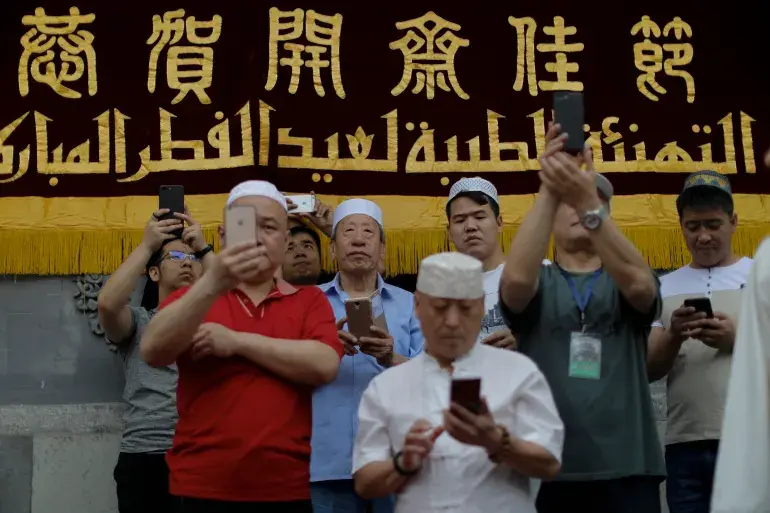
Ma Ruilin, who previously worked within China’s religious affairs bureaucracy, described his transformation from a mid-level official tasked with implementing government policy into a vocal critic now living in exile in the United States. He said he chose to speak publicly to inform fellow members of the Hui Muslim community that they are “not alone” amid growing restrictions on religious practice.
Ma, 50, formerly held a managerial post in the Religious Affairs Bureau in Gansu province. He now resides in New York City, where he runs a halal restaurant in Manhattan. In his interviews, he recounted how digital monitoring systems he helped design in 2008 were later expanded into tools of mass surveillance targeting Muslim worshippers.
According to Ma, these systems evolved into comprehensive databases using facial recognition technology to track mosque attendance, monitor social interactions, and compile individual religious profiles.
Surveillance and control mechanisms
Ma explained that cameras installed at mosque entrances record how often individuals attend prayers and whom they interact with. He said the data collected can lead to police interrogations, job losses, travel bans, or, in some cases, transfers to so-called “re-education” facilities.
He acknowledged his role in creating early versions of these databases, describing it as a profound personal regret. He said the systems were later repurposed by authorities into what he characterized as instruments of coercion against Muslim communities.
Ma described living a double life for years—enforcing restrictions on religious activity during working hours while secretly practicing his faith at night. He said party officials were trained to prioritize loyalty to the state over empathy, viewing individuals as entities to be managed rather than as citizens with rights.
Break with the system
Ma said his personal turning point came in 2015 while leading a state-organized pilgrimage delegation, which prompted what he described as a spiritual awakening. He subsequently became increasingly conflicted over policies aimed at the “Sinicization” of religion under President Xi Jinping, including restrictions on Arabic language use and the demolition of mosque minarets.
In February 2024, Ma managed to leave China and travel to the United States after his family had already departed, ending what he described as a decade-long period of fear and internal conflict.
He concluded his account by saying he hopes his testimony can offer encouragement to Hui Muslims facing repression in China, describing his decision to speak out as an attempt to “shed light in the darkness.”