World Bank urges Morocco to shift toward a more inclusive growth model
Edited By: Aya Selene
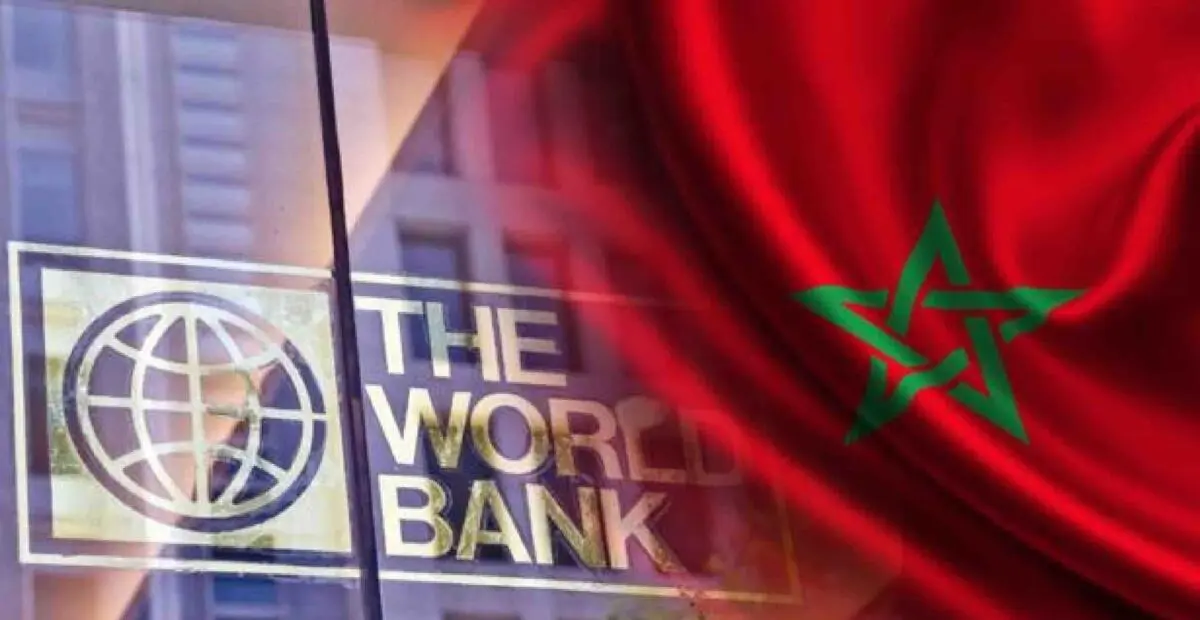
A recent report by the World Bank presents a comprehensive assessment of Morocco’s economic trajectory, describing the country as a stable and reform-oriented economy that has achieved significant progress over the past two decades.
The report, titled “Scaling the Atlas: Growth and Jobs for a Prosperous Morocco,” emphasizes improvements in infrastructure, integration into global value chains, and the expansion of export-oriented industries. It also notes advances in poverty reduction and human capital development, positioning Morocco as a resilient emerging economy.
However, this positive outlook is tempered by structural challenges. The World Bank argues that Morocco’s current growth model is reaching its limits, as it struggles to generate sufficient employment and productivity gains. Economic expansion remains largely driven by capital investment, with limited contribution from labor and total factor productivity.
Growth without sufficient job creation
One of the report’s central findings is the disconnect between growth and job creation. Despite relatively stable economic performance, Morocco faces a persistent employment gap, with hundreds of thousands of jobs needed annually to absorb the labor force. At the same time, labor market participation has declined, reflecting structural weaknesses in employment generation.
The report also highlights the dominant role of public investment, which accounts for a large share of total capital formation. While this has supported infrastructure development, it may also crowd out private sector expansion and limit the efficiency of resource allocation.
Structural constraints on productivity
Morocco’s productive fabric is characterized by a high concentration of very small firms, many operating in low-productivity sectors. Larger firms, meanwhile, do not always exhibit higher efficiency, pointing to distortions in competition and resource allocation.
Barriers to growth include regulatory constraints, limited access to finance for smaller businesses, and insufficient competition in key sectors such as energy, transport, and services. These factors contribute to a misallocation of resources and hinder overall productivity gains.
Underutilized human capital
The report underscores significant imbalances in the labor market, particularly affecting young graduates, rural workers, and women. A large share of graduates are overqualified for their jobs, while rural employment has been hit by climate-related shocks. Female labor force participation remains especially low, identified as a major untapped source of growth.
A call for systemic reform
To address these challenges, the World Bank recommends a comprehensive reform agenda focused on improving market efficiency, strengthening competition, and boosting private sector dynamism. It also calls for more effective public investment and policies aimed at enhancing inclusion, particularly through education reform and increased female participation in the workforce.
According to the report’s projections, such reforms could significantly boost economic output, create millions of jobs, and raise real wages over the coming decade. Ultimately, the study frames Morocco’s situation not as a failure, but as a turning point—requiring a shift toward a more productive, inclusive, and private sector-driven growth model.