Morocco Enters the AI Race With a Sovereignty First Strategy
Edited by: Anwar El Mourjani
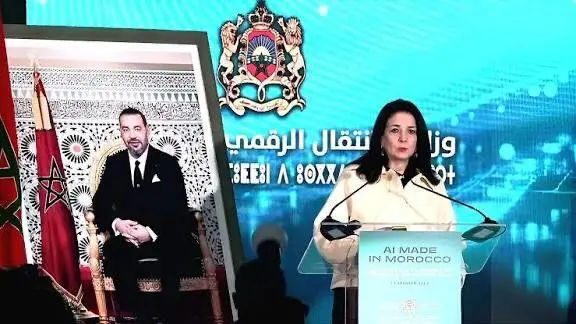
Morocco has crossed a decisive threshold in its digital trajectory with the official launch of its national “AI Made in Morocco” strategy in January 2026. More than a policy announcement, the move signals a clear ambition to treat artificial intelligence as a pillar of state capacity rather than a peripheral technology. By joining early movers such as Egypt, Rwanda and Kenya, the Kingdom is positioning itself in a regional race where AI is increasingly seen as a tool of competitiveness, governance and strategic autonomy. Morocco’s sharp rise in international assessments of government readiness reflects a broader shift in political thinking, one that frames AI as long term infrastructure shaping economic power and public authority.
At the core of the strategy lies an effort to build control before scale. A new legal framework, often referred to as Digital X.0, is being prepared to define responsibilities around algorithmic decision making, data use and accountability across both public administration and the private sector. In parallel, Morocco is investing in sovereign technological infrastructure, including national data and computing capacity, to reduce reliance on external platforms. The Jazari network, anchored in Rabat with planned regional extensions, is designed to connect research, startups and public institutions, ensuring that AI development is coordinated rather than fragmented. For civil servants, local authorities and entrepreneurs, this translates into a push to integrate AI into public services, urban management and industrial processes in a controlled and measurable way.
The human dimension is central to this vision. The government is betting heavily on training, reskilling and education to create a domestic pool of engineers, researchers and practitioners capable of designing and governing AI systems. Officials speak openly of jobs, productivity gains and a significant contribution to national output over the coming decade, but also of the risks of moving too fast without safeguards. By choosing to regulate early and invest simultaneously in people and infrastructure, Morocco is attempting to avoid the pattern seen elsewhere, where innovation outpaces oversight. Whether this balance can be maintained will determine if AI becomes a shared engine of development or a source of new inequalities. What is clear is that Morocco no longer views artificial intelligence as optional, but as a strategic arena where sovereignty is increasingly negotiated.