Anthony Fauci: The White House’s Top Doctor Accused of Concealing the Origins of COVID-19
Edited By: Africa Eye
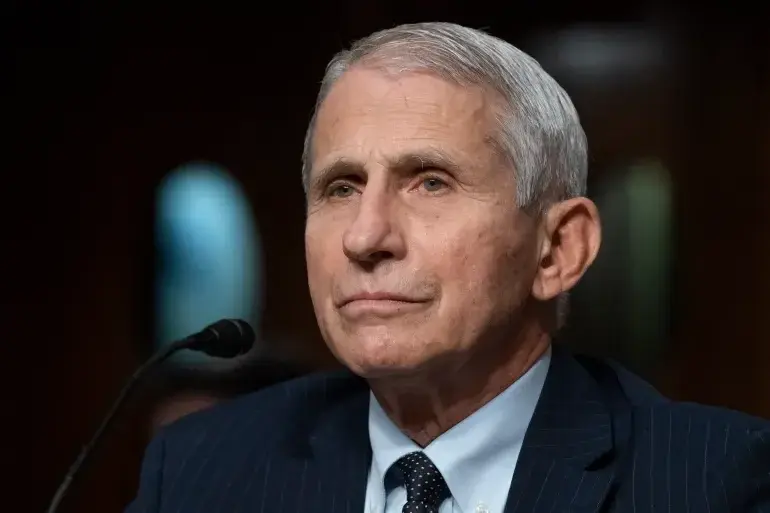
Anthony Fauci is an American immunologist who served as Chief Medical Advisor to the White House and Director of the National Institute of Allergy and Infectious Diseases (NIAID) for 38 years. Over the course of his career, he worked under seven U.S. presidents across 11 presidential terms and played a leading role in combating numerous infectious diseases and epidemics.
Fauci was a key member of the U.S. government’s response to the COVID-19 pandemic, which claimed approximately 1.2 million lives in the United States. He helped shape national public health strategies and became one of the most recognizable faces of the pandemic through frequent television appearances and press briefings. However, his prominence also made him a target of criticism and repeated clashes with then-President Donald Trump.
On June 20, 2026, outgoing Director of National Intelligence Tulsi Gabbard released declassified documents and communications that she claimed shed light on Fauci’s role in funding controversial genetic research at China’s Wuhan Institute of Virology, which has long been suspected by some as a possible source of the coronavirus outbreak. Gabbard further alleged that Fauci later collaborated with members of the U.S. intelligence community to suppress information supporting the laboratory-leak theory and provided misleading testimony before Congress in 2024.
Early Life and Education
Anthony Stephen Fauci was born on December 24, 1940, in Brooklyn, New York, to a family of Italian immigrants. He grew up in a predominantly Italian-American neighborhood and spent part of his childhood helping his father deliver prescriptions from the family pharmacy.
He attended the prestigious Regis High School in Manhattan before studying pre-medical sciences at the College of the Holy Cross in Massachusetts, graduating in 1962. He later earned his medical degree from Cornell University Medical College in 1966, graduating at the top of his class, and completed his residency at New York Hospital-Cornell Medical Center in 1968.
Career and Public Service
Fauci joined the National Institutes of Health (NIH) in 1968, focusing on infectious diseases. He rose through the ranks and became Director of NIAID in 1984, a position he would hold for nearly four decades.
His career took a major turn in the early 1980s with the emergence of AIDS. At a time when the disease was poorly understood, Fauci shifted his research focus to HIV/AIDS and became one of the leading figures in the fight against the epidemic. He played a crucial role in advancing treatments, expanding research funding, and later helped shape President George W. Bush’s Emergency Plan for AIDS Relief (PEPFAR), which saved millions of lives worldwide.
Beyond AIDS, Fauci contributed to U.S. responses to outbreaks including West Nile virus, Ebola, Zika, pandemic influenza, anthrax attacks, and tuberculosis. He retired in 2022 as both White House Chief Medical Advisor and NIAID Director.
Fauci and the COVID-19 Pandemic
When COVID-19 emerged in late 2019, Fauci became a central figure in the U.S. response. As part of President Trump’s coronavirus task force, he advocated measures aimed at slowing the spread of the virus and frequently emphasized scientific guidance.
His public disagreements with President Trump, particularly regarding the severity of the pandemic and mitigation measures, became highly visible. Fauci later described his relationship with Trump as complicated, noting that he often felt compelled to correct statements made by the president during press briefings.
Fauci also faced criticism over changing public health recommendations, including guidance on face masks. He reported receiving death threats as misinformation surrounding the pandemic intensified. Before leaving office in January 2025, President Joe Biden granted Fauci a preemptive pardon, arguing that public servants should not face politically motivated retaliation.
The Declassified Documents Controversy
According to the documents released by Tulsi Gabbard in June 2026, Fauci allegedly approved millions of dollars in funding for gain-of-function research at the Wuhan Institute of Virology. Gain-of-function research involves modifying microorganisms, such as viruses, to study changes in transmissibility, virulence, or host range.
Gabbard further claimed that Fauci misled Congress and worked with intelligence officials to reinforce the narrative that COVID-19 emerged naturally rather than through a laboratory accident. She argued that his influence helped shape expert opinions and public messaging on the origins of the pandemic. These allegations remain politically contentious and have fueled renewed debate about the origins of COVID-19.